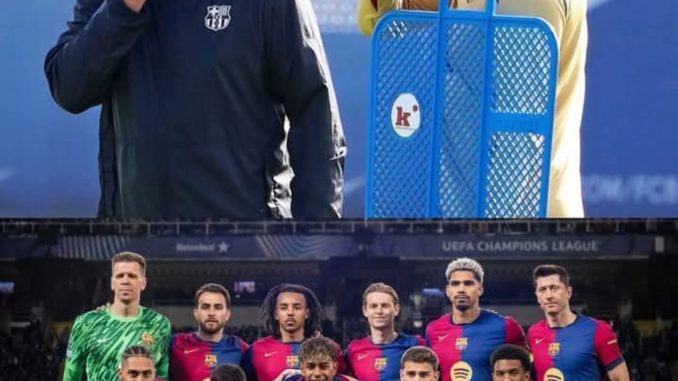
Reports from the press have shed light on an internal conflict within Barcelona’s first-team dressing room, which has emerged in recent times.
Barcelona recently secured a place in the quarter-finals of this season’s UEFA Champions League following a 2-2 draw against Italian club Atalanta at the Montjuïc Stadium in the Round of 16. However, behind the scenes, tensions have surfaced between members of the club’s coaching staff.
According to various media sources, journalist Javi Miguel has revealed a dispute between Barcelona’s head coach, Hansi Flick, and the team’s goalkeeping coach, José Ramón de la Fuente.
The disagreement reportedly centers around the selection of the team’s starting goalkeeper. De la Fuente is said to favor Iñaki Peña, believing he should continue as Barcelona’s first-choice goalkeeper.
In contrast, Flick has chosen to rely on Polish goalkeeper Wojciech Szczęsny. This decision became apparent when Szczęsny was selected for key matches, including the La Liga fixture against Valencia in the 21st round and the Champions League clash with Atalanta.
The reports suggest that Flick’s choice goes against the traditional goalkeeper rotation system, which has been a common practice at the club. This deviation from the norm is believed to have caused unrest within the dressing room, as some players and staff members may not fully support the coach’s decision.
A journalist with close ties to the club has further disclosed that de la Fuente cautioned Flick about the risks associated with playing Szczęsny. The goalkeeping coach reportedly expressed concerns that the Polish shot-stopper’s style of play—particularly his tendency to take unnecessary risks—could prove costly for the team.
He warned that mistakes from Szczęsny could significantly impact Barcelona’s performance this season, potentially undermining their chances of success.
This reported internal conflict highlights a potential rift in Barcelona’s coaching staff, with differing perspectives on key tactical decisions. If left unresolved, such disagreements could disrupt the team’s cohesion and affect their performances in crucial matches as they continue to compete in both domestic and European competitions.
Leave a Reply