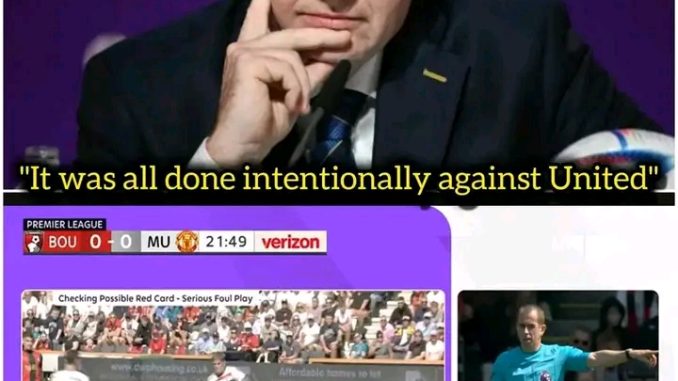
During the opening half at Vitality Stadium, Tyler Adams launched into a fierce tackle on Alejandro Garnacho, with both feet leaving the ground—an action often categorized as serious foul play. Referee Peter Bankes responded by showing a yellow card, a decision that, after being scrutinized by VAR, was allowed to stand. Later, the Premier League clarified through its Match Centre X account that the tackle was considered “reckless” rather than “serious foul play,” thus not warranting a red card under their guidelines.
This official explanation did little to soothe the frustration among Manchester United fans. Social media exploded with outrage, with supporters expressing their anger and disbelief. Comparisons were quickly drawn to past situations where similar tackles had resulted in red cards. One particularly vocal fan’s outburst—accusing Adams of almost “killing” Garnacho—captured the raw emotions many were feeling over what they viewed as a blatant officiating failure.
While the Premier League is tasked with managing matchday officiating, the overarching responsibility for VAR’s implementation falls to FIFA, placing the global governing body under increased scrutiny. The incident reopened long-standing debates about VAR’s effectiveness and its uneven application across leagues, with many questioning whether the technology is achieving its intended goal of improving fairness in football.
A chorus of critics has since argued that such inconsistency damages the credibility of VAR and chips away at the trust players, managers, and supporters place in the system. The differing interpretations of similar challenges suggest deep-rooted issues with referee training and the operational guidelines given to VAR officials, leading to calls for systemic change.
The game itself ended in a 1-1 stalemate. Bournemouth’s Antoine Semenyo struck first before Manchester United’s Rasmus Højlund salvaged a point deep into stoppage time. However, controversy persisted, as United were denied two penalties involving Harry Maguire without any VAR checks. In contrast, Bournemouth’s Evanilson saw red after a VAR review for a foul on Noussair Mazraoui, exposing glaring inconsistencies in officiating within the same match.
This string of questionable decisions has intensified demands for greater transparency in how VAR is applied. Pundits and former professionals alike are now advocating for the release of audio between referees and VAR officials, believing that opening up the decision-making process could help bridge the gap between the officials and the viewing public.
There is also a growing push for FIFA to create universal VAR protocols that would apply across all competitions. Enhanced training programs and stricter, clearly communicated guidelines for both referees and VAR officials have been floated as necessary steps to repair the system’s reputation and ensure a more consistent and fair use of technology.
Ultimately, the contentious decision during the Bournemouth vs. Manchester United clash underscores the ongoing struggles facing football’s governing bodies in the era of technological intervention. If FIFA fails to address these concerns head-on, the risk is a continued erosion of faith in officiating, undermining not only the spirit of fair play but the very foundation on which the global game is built.
Leave a Reply