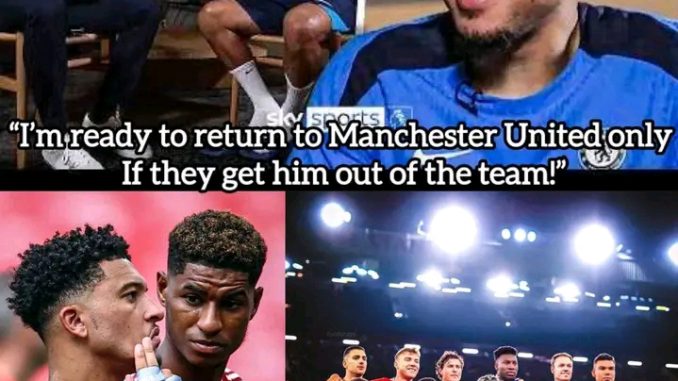
At Stamford Bridge, Jadon Sancho openly shared his intention to return to Manchester United in January, but under one firm condition. Sancho stated his desire to reunite with the club but insisted that a particular player must leave before his return. He described Old Trafford as his home and expressed a deep connection to the team, but emphasized that changes are essential for him to thrive. His willingness to rejoin the squad is now tied to this demand, making his return conditional on a significant squad adjustment.
Sancho’s announcement has reignited discussions about his future at Manchester United. Fans and football experts have been analyzing his bold stance, trying to uncover the implications of his demand. This latest development has added another layer of complexity to the ongoing narrative about Sancho’s turbulent journey with the club.
Speaking about his potential comeback, Sancho was candid in his remarks. He expressed readiness to return but maintained that necessary adjustments are non-negotiable. While he didn’t disclose the identity of the player he wants out, close sources suggest a long-standing personal or professional conflict might be influencing his stance. His firm position underscores the challenges the club faces in managing individual players’ dynamics within the squad.
Sancho’s time at Manchester United has been fraught with difficulties. Since his highly anticipated move from Borussia Dortmund, he has struggled with injuries, inconsistent performances, and controversies off the pitch. Under previous management, his relationship with the club deteriorated, leaving him sidelined indefinitely. Despite hopes for a fresh start under new manager Ruben Amorim, Sancho’s latest demand introduces a fresh challenge for the club’s leadership.
Fans are divided over Sancho’s ultimatum. While some criticize him for attempting to influence the club’s internal decisions, others argue that accommodating his request could unlock his full potential. Supporters on both sides of the debate have taken to social media to voice their opinions, reflecting broader tensions about balancing individual player needs with team harmony. The discourse highlights the difficulty of managing high-profile players in modern football.
Adding intrigue to the situation is the mystery surrounding the player Sancho reportedly wants out. Speculation has ranged from rivals competing for his position to deeper, unresolved conflicts within the squad. This ambiguity keeps the story alive in the media, as fans and pundits alike attempt to decipher the identity of the individual at the center of this standoff.
Manchester United now finds itself in a precarious position. Manager Ruben Amorim faces the challenge of addressing Sancho’s demands without compromising his authority or disrupting squad unity. The club must weigh the potential benefits of reintegrating Sancho against the risks of appeasing individual players at the expense of team cohesion. The decision could have long-term implications for their strategy and season outcomes.
As the January transfer window looms, Manchester United must decide whether to meet Sancho’s condition or move forward without him. While his talent and potential are undeniable, accommodating his demand could set a difficult precedent. On the other hand, refusing might mean losing a player with significant market value and potential impact. For now, the football world watches closely, awaiting the club’s next move in this high-stakes saga.
Leave a Reply