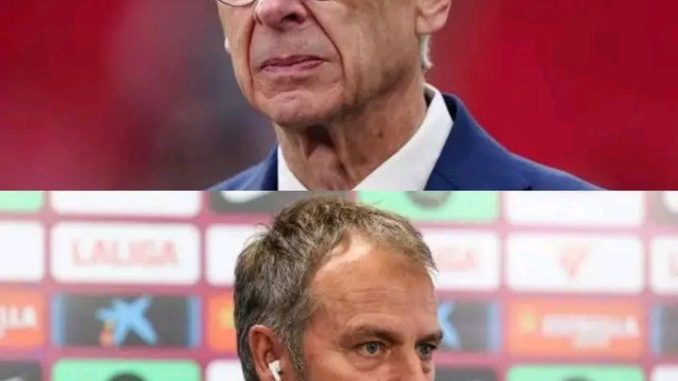
Arsène Wenger, widely regarded as one of football’s most insightful minds, has consistently provided thoughtful commentary on the sport’s leading managers. Recently, he shared his observations about Hansi Flick, Barcelona’s current head coach, following the team’s surprising 2-1 defeat to Las Palmas in La Liga.
The loss has placed Flick under intense scrutiny. Wenger, having navigated the highs and lows of elite football management, offered his perspective on the hurdles Flick faces in his new role. Flick’s arrival at Barcelona earlier this year was met with optimism, given his exceptional track record with Bayern Munich and his ability to guide teams through transitional periods. Many believed he was the ideal figure to lead the club through the post-Xavi era, but recent setbacks have raised questions about his methods.
The defeat against Las Palmas underscored persistent issues that have plagued Barcelona throughout the season. Despite taking an early lead, Barcelona’s vulnerabilities, particularly in defense, were exposed as Las Palmas staged a comeback. This marked Barcelona’s second defeat of the season and prompted doubts about Flick’s tactical approach and his ability to meet the unique demands of managing such a storied club.
Wenger expressed empathy for Flick, acknowledging the enormous expectations that come with coaching Barcelona. He noted that while the team has undeniable talent, its tactical execution remains a work in progress. Wenger stressed that Flick must address glaring weaknesses, particularly in defense, which appeared disorganized and out of sync during the match. He emphasized the need for a better balance between Barcelona’s attacking flair and defensive solidity, a hallmark of successful teams.
Another point Wenger highlighted was the importance of team cohesion. While Barcelona possesses individual stars like Robert Lewandowski and Pedri, Wenger believes that Flick must prioritize fostering a unified team dynamic. At top clubs, success hinges not just on individual brilliance but on collective performance. Wenger argued that Barcelona’s players need to function as a cohesive unit to maximize their potential.
Additionally, Wenger pointed out that adapting to Barcelona’s unique style and philosophy is crucial for Flick’s success. Unlike the high-pressing, direct approach Flick favored at Bayern Munich, Barcelona’s identity revolves around patient, possession-based football. Wenger suggested that Flick must respect this tradition while finding ways to integrate his own ideas, a delicate balancing act that demands thoughtful adaptation.
Despite the challenges, Wenger expressed confidence in Flick’s abilities. He noted that setbacks like the loss to Las Palmas can serve as valuable learning experiences. Wenger believes that Flick’s coaching acumen and experience equip him to make the necessary adjustments and improve the team’s performance both defensively and offensively.
Wenger also emphasized that Flick is still in the early stages of his tenure at Barcelona. Success will depend on a range of factors, including squad cohesion, tactical adjustments, and individual player form. Wenger urged patience, as building a team that reflects Flick’s vision takes time and careful planning.
Ultimately, Wenger’s analysis underscores the complexity of Flick’s task at Barcelona. While the defeat to Las Palmas highlighted significant challenges, it also provided an opportunity for growth. With strategic adjustments and a commitment to unity, Flick has the potential to guide Barcelona back to the pinnacle of football. However, achieving this will require perseverance, tactical evolution, and a collective effort from the entire team.
Leave a Reply